When it comes to industrial surface preparation, coating removal, and equipment cleaning, not all blasting methods are created equal. The right choice depends on your substrate, the material being removed, environmental conditions, regulatory requirements, and what the surface needs to look like when the job is done.
At Mid America Service Solutions, we offer a full range of professional blasting services across the nation — including sandblasting (abrasive blasting), hydro blasting (water jetting), and dry ice blasting. In this post, we’ll break down how each method works, where it excels, where it has limitations, and how to choose the right approach for your specific application.
Why Surface Preparation Matters
Whether you’re recoating a storage tank, restoring structural steel, cleaning industrial equipment, or preparing a surface for inspection, the quality of the surface preparation directly determines the quality of the end result. The Association for Materials Protection and Performance (AMPP) has long recognized that coating failures are more often caused by poor surface preparation than by the coating itself.
Professional blasting services accomplish several critical goals:
- Remove rust, scale, old coatings, and contaminants
- Create the right surface profile for new coating adhesion
- Clean equipment and surfaces without damaging the substrate
- Meet regulatory or customer-specified cleanliness standards
The key is matching the method to the job.
Method #1: Sandblasting (Abrasive Blasting)
How It Works
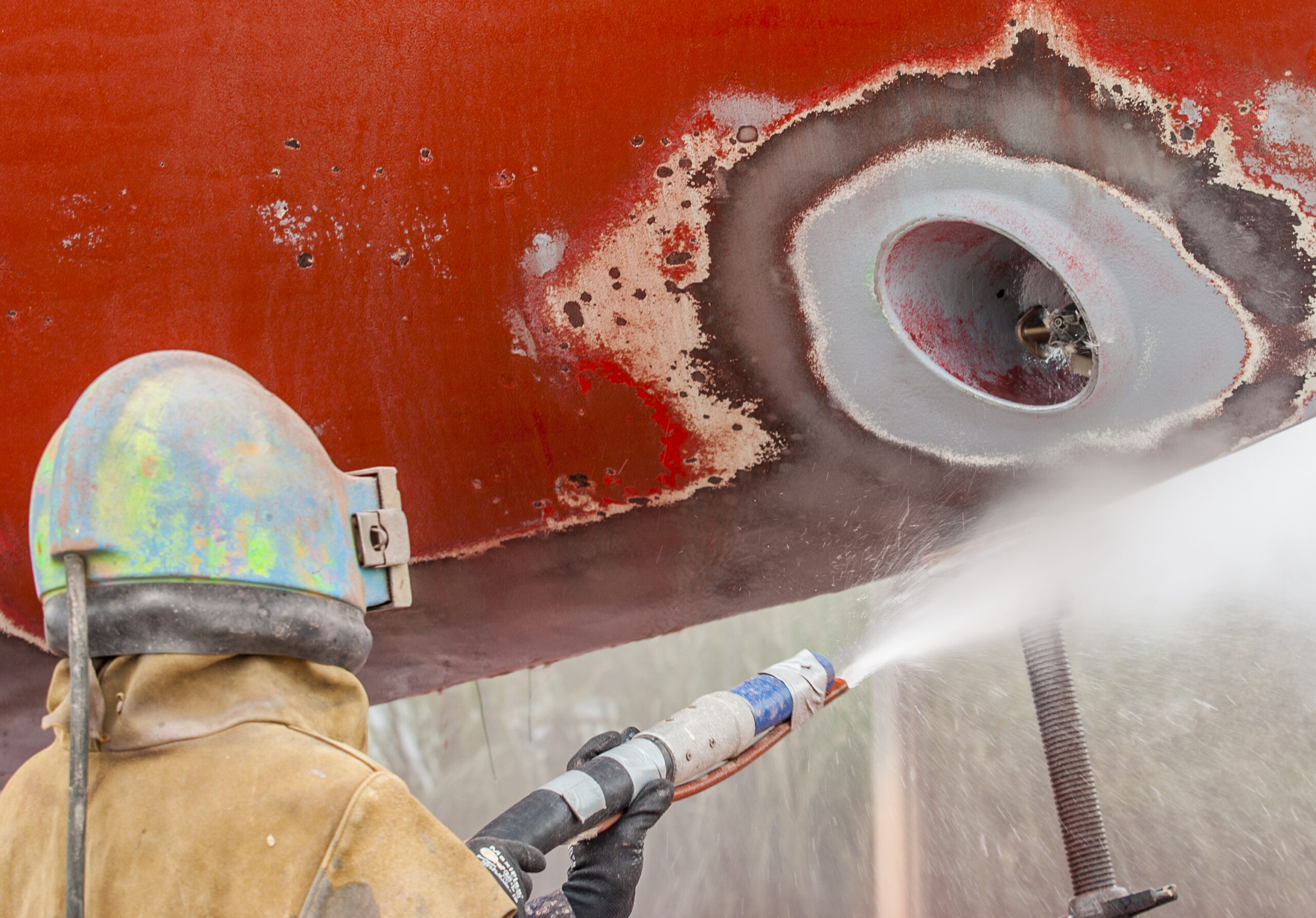
Sandblasting — more broadly called abrasive blasting — propels abrasive media at high velocity against a surface using compressed air. While traditional silica sand was once the standard media, modern abrasive blasting uses a variety of materials depending on the application:
- Steel grit and shot — Aggressive media for heavy rust and scale removal on structural steel
- Garnet — A popular choice for tank interiors and coating removal; produces a consistent surface profile
- Coal slag and copper slag — Cost-effective media for large-scale exterior blasting
- Aluminum oxide — Hard, fast-cutting media for industrial equipment
- Glass bead — Gentler media for cleaning without significant surface profiling
- Plastic media — Non-aggressive option for delicate surfaces or aviation components
- Walnut shell and corn cob — Organic media for soft substrates
What Abrasive Blasting Is Best For
Abrasive blasting is the workhorse of industrial surface preparation. It excels at:
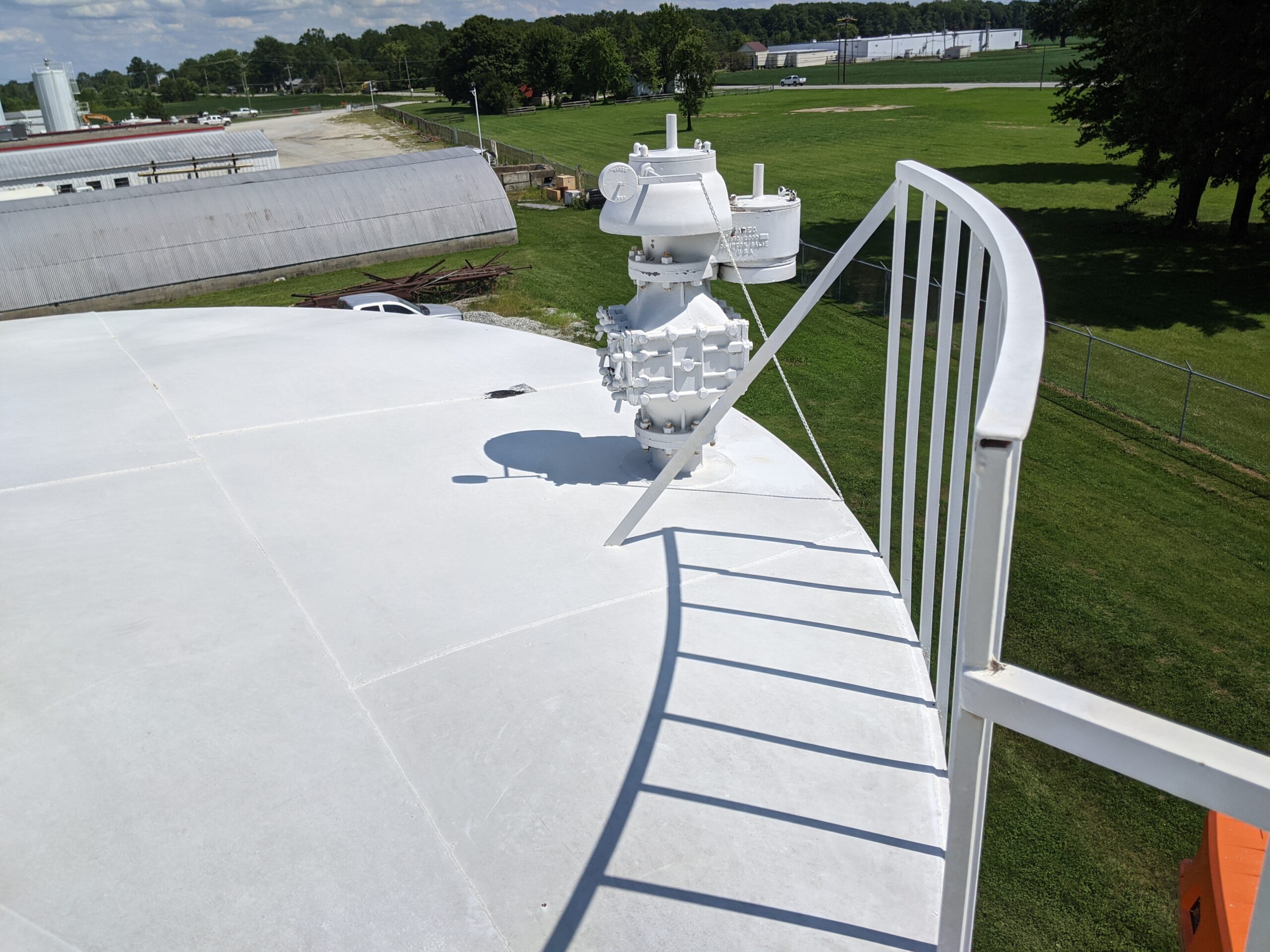
- Tank interior and exterior preparation — Achieving cleanliness standards required before protective coating application
- Structural steel preparation — Bridges, support structures, railings, and beams
- Pipe and vessel preparation — Removing mill scale, rust, and old coatings prior to recoating
- New construction surface prep — Preparing new steel before primary coatings are applied
- Concrete surface preparation — Opening the surface profile on concrete floors and structures
Advantages of Abrasive Blasting
- Creates a defined surface profile (anchor pattern) for maximum coating adhesion
- Achieves the highest cleanliness standards available
- Highly effective on heavy rust, thick coatings, and mill scale
- Versatile — media can be selected to match virtually any substrate and finish requirement
- Widely accepted by coating manufacturers as the preferred prep method
- Relatively fast on large open surfaces
Limitations of Abrasive Blasting
- Generates significant dust and debris — containment is required, especially in environmentally sensitive areas or near occupied buildings
- Requires blast media disposal — spent media must be characterized and disposed of properly, particularly if it has absorbed lead, chromate, or other hazardous materials from stripped coatings
- Not suitable for sensitive equipment — the abrasive impact can damage electronics, bearings, precision surfaces, and certain alloys
- Surface must be dry — abrasive blasting on wet or damp surfaces can drive chlorides into the steel
- Requires respiratory protection and PPE for operators
- OSHA prohibits the use of unmodified crystalline silica sand due to silicosis risk
Method #2: Hydro Blasting
How It Works
Hydro blasting uses high-pressure or ultra-high-pressure water to clean, remove coatings, and prepare surfaces. The industry distinguishes between several pressure ranges:
| Classification | Pressure Range | Typical Applications |
| High-Pressure Water Cleaning | 5,000 – 10,000 psi | General industrial cleaning |
| High-Pressure Water Jetting | 10,000 – 25,000 psi | Coating removal, tank cleaning |
| Ultra-High-Pressure (UHP) Water Jetting | 25,000 – 40,000+ psi | White metal equivalent prep, coating removal |
Hydro blasting does not use abrasive media — the cutting force comes entirely from the water stream itself, sometimes with rotating nozzle heads (rotary jets) for maximum coverage and consistency.
What Hydro Blasting Is Best For
Hydro blasting shines in applications where abrasive blasting would be impractical or prohibited:
- Tank interior cleaning and coating removal — Especially when old coatings contain lead, chromium, or other hazardous materials; water keeps dust down and reduces airborne exposure
- Industrial equipment cleaning — Removing scale, biological growth, process buildup, and fouling from heat exchangers, condensers, pipes, and vessels
- Pipe and tube cleaning (hydroblasting and hydrojetting) — Clearing blockages and removing scale from process piping and sewer lines
- Surface preparation in environmentally restricted areas — Where dry abrasive blasting and its associated dust would be unacceptable
- Offshore and marine applications — Where water is plentiful and abrasive containment is difficult
- Recoating over existing tight coatings — When only a water-jetting standard is required
Advantages of Hydro Blasting
- No abrasive media — No media containment, no media disposal costs, and no abrasive contamination of the substrate
- Dramatically reduces airborne dust — Critical when removing lead or chromate coatings; keeps hazardous material in the water stream for easier collection
- Cleans and removes coatings simultaneously — Ideal for combined cleaning and prep operations
- No spark risk — Important in flammable or explosive environments where abrasive blasting would create ignition hazard
- Reaches tight spaces — Flexible lances and rotating heads can access areas difficult to abrasive blast
- Gentle enough for some sensitive surfaces — At lower pressures, can clean without damaging substrate
Limitations of Hydro Blasting
- Does not create a new surface profile — Water jetting can remove loose material, but it won’t anchor-profile a smooth steel surface the way abrasive blasting does; this can limit coating adhesion
- Requires wastewater management — Water contaminated with coatings, chemicals, and biological material must be collected and disposed of properly
- Flash rusting — Bare steel surfaces will flash rust rapidly after hydro blasting unless treated immediately with a flash rust inhibitor or a coating designed for application to damp steel
- Slower than abrasive blasting on very thick or tightly adherent coatings
- High equipment and operating costs — UHP equipment is capital-intensive and requires skilled operators
Method #3: Dry Ice Blasting
How It Works
Dry ice blasting propels pellets of solid CO₂ (dry ice) at high velocity using compressed air. On impact, the dry ice sublimates — converting instantly from solid to gas — creating a micro-thermal shock that lifts and removes contaminants from the surface. Because the media immediately turns to gas, there is no secondary waste stream from the blasting media itself.
What Dry Ice Blasting Is Best For
Dry ice blasting occupies a unique niche: it cleans without abrasion, without moisture, and without leaving any media residue. This makes it ideal for:
- Food and beverage equipment cleaning — Cleaning conveyor systems, mixers, ovens, and processing equipment in place without disassembly, and without introducing moisture or abrasive contamination
- Electrical and mechanical equipment — Safely cleaning energized or sensitive equipment, motors, control panels, switchgear, and wiring without damage
- Printing and packaging equipment — Removing ink, adhesive, and buildup from rollers, presses, and packaging machinery
- Mold remediation — Removing mold from structural surfaces, including wood, without spreading spores or saturating the surface with water
- Historic preservation and restoration — Cleaning delicate surfaces where abrasion would cause damage
- Automotive and aerospace tooling — Cleaning molds, dies, and precision tooling in place
- General plant and facility cleaning — Removing grease, oil, and production residue from surfaces and equipment without shutdown
Advantages of Dry Ice Blasting
- No secondary waste — The CO₂ media sublimates completely; only the removed contaminant needs to be cleaned up
- Non-abrasive — Cleans without scratching or profiling the substrate; safe for sensitive surfaces, coatings, and precision parts
- No moisture — Will not cause flash rusting, swell wood, or damage electronics
- Can clean in place — Equipment often doesn’t need to be disassembled or moved, reducing downtime significantly
- No chemical cleaning agents required — Environmentally friendly; no solvent waste streams
- Safe for food contact surfaces — CO₂ is food-safe; no contamination risk in food processing environments
- Kills surface mold and bacteria — The extreme cold of dry ice has a sanitizing effect
Limitations of Dry Ice Blasting
- Not a surface preparation method for coatings — Dry ice blasting will not create a surface profile adequate for industrial coating application; it is a cleaning method, not a prep method
- Higher cost per square foot than abrasive or water methods for large-scale coating removal
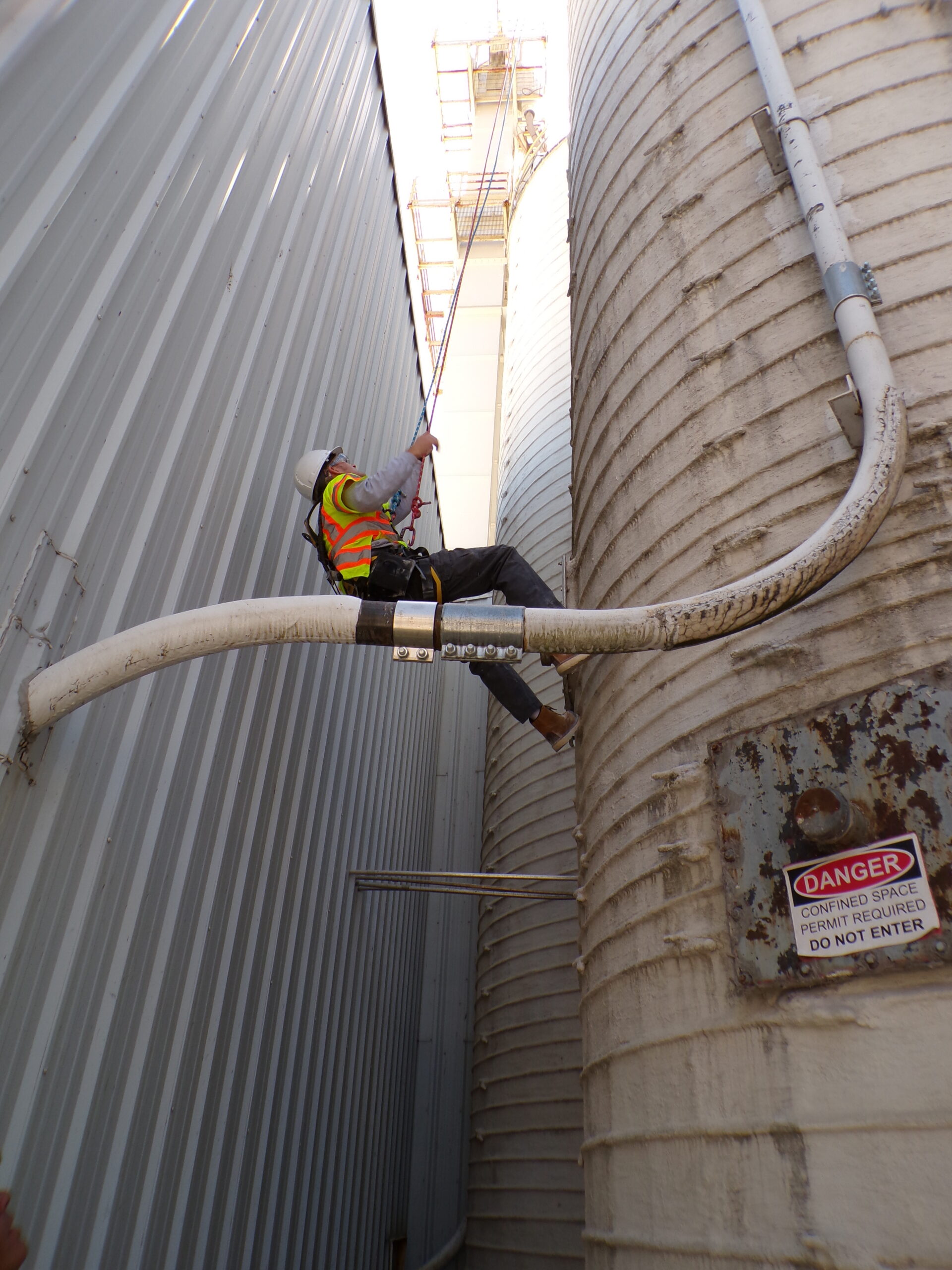
- CO₂ safety considerations — Sublimated CO₂ displaces oxygen; adequate ventilation is required, particularly in confined spaces
- Less effective on very thick or tightly bonded coatings — Better suited to loosely adherent contamination than heavy mill scale or multiple layers of industrial paint
- Dry ice supply and handling — Requires a reliable supply chain for dry ice pellets and proper handling/storage to prevent premature sublimation
Side-by-Side Comparison
| Abrasive Blasting | Hydro Blasting | Dry Ice Blasting | |
| Primary Use | Surface prep for coatings | Cleaning & coating removal | Equipment cleaning |
| Creates Surface Profile |  Yes Yes |  No No | No |
| Media Waste | Yes (must dispose) | N/A | None |
| Water Waste | None | Yes (must collect) | None |
| Dust Generation | Significant | Minimal | Minimal |
| Safe on Electronics | No | No | Yes |
| Safe in Food Facilities | No |  Depends Depends | Yes |
| Flash Rust Risk | Low (dry) | Yes | No |
| Confined Space Use | With ventilation | With drainage | CO₂ monitoring required |
| Hazardous Coating Removal | Dust management needed | Preferred method | Not ideal |
| Cost (Large Areas) |  Lower Lower | Moderate | Higher |
| Equipment Damage Risk | High for sensitive parts | Moderate | Minimal |
How to Choose the Right Blasting Method
Here’s a practical decision guide for common scenarios:
You need to prepare a steel tank interior for a new protective coatng → Abrasive blasting (garnet or steel grit) to SSPC-SP 10 Near-White Metal or SP 5 White Metal.
You need to remove a lead-based coating from an aboveground storage tank → Hydro blasting (UHP water jetting) to minimize airborne lead dust and contain the hazardous waste stream in the water.
You need to clean a food processing conveyor and mixer without shutting down the line → Dry ice blasting — no moisture, no residue, no contamination risk.
You need to clean fouled heat exchanger tubes or process piping → Hydro blasting with tube lances and rotary jets.
You need to remove heavy mill scale from new structural steel before coating → Abrasive blasting — water jetting and dry ice won’t create the profile needed for coating adhesion.
You need to clean electrical panels and motors in a chemical plant → Dry ice blasting — safe for energized equipment, no moisture, no abrasive contamination.
You’re recoating concrete floors and need to open the surface profile → Abrasive blasting (shot blasting) or scarification.
Industries We Serve with Blasting Services
Our blasting crews work across a wide range of industries throughout the Midwest:
- Oil & Gas and Petrochemical — Tank interior and exterior blasting, pipe prep, vessel preparation
- Chemical — Coating removal from chemical storage vessels with lead and hazardous material protocols
- Food & Beverage — Dry ice blasting for production equipment; abrasive prep for facility steel
- Agriculture — Fertilizer and chemical tank prep, equipment cleaning
- Automotive and Manufacturing — Plant equipment cleaning, structural steel prep, floor prep
- Wastewater and Municipal — Clarifier and digester prep for recoating, wet well restoration
- Power Generation — Boiler cleaning, tank and vessel prep, structural steel maintenance
- Coal and Mining — Heavy-duty abrasive blasting on slurry tanks, process vessels, and equipment
Partner with Mid America Service Solutions for Your Next Blasting Project
Choosing the right blasting method isn’t always straightforward — and getting it wrong means redoing the work, delaying your project, or ending up with a coating that fails prematurely. Mid America Service Solutions has the equipment, expertise, and experience to assess your specific situation and recommend the right approach.
Whether you need aggressive abrasive surface preparation on a large storage tank, ultra-high-pressure water jetting to remove a hazardous coating, or precision dry ice cleaning of sensitive production equipment, we bring the right tools and trained crews to get the job done safely and correctly.
 Contact Mid America Service Solutions today to discuss your project and get a detailed quote. We serve industrial clients across the Midwest with professional blasting services and a commitment to quality workmanship and safety compliance.