
Sand Blasting
- Home
- Services
- Sand Blasting
Sand Blasting with Mid America Service Solutions
Sandblasting is one of the most widely used and effective surface preparation methods in industrial and commercial settings. Sandblasting is the process of propelling abrasive particles at high speeds across the surface using compressed air. This impact removes unwanted materials such as paint, rust, oxidation, or residue and leaves behind a clean and uniform surface. Sandblasting is valued not only for its efficiency but also for its versatility. It can be used to adapt to a wide range of substrates and project requirements. While the term “sandblasting” originally came from the use of sand as the blasting medium, modern practices now use a much broader range of abrasive materials to achieve better results while also minimizing health and environmental risks.
Sandblasting allows professionals to select from a diverse range of abrasive materials, each designed to tackle different challenges. Common blasting materials include:
- Crushed glass
- Steel grit
- Aluminum oxide
- Garnet
- Plastic beads
- Glass beads
- Organic options such as walnut shells
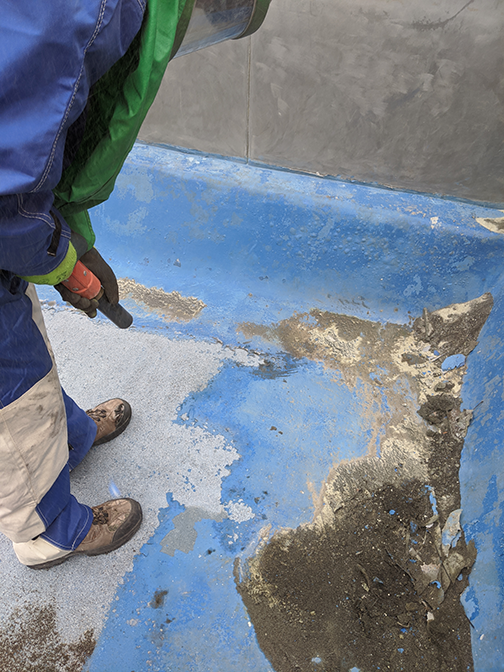
This wide selection ensures that no matter the condition of the surface, there is a medium option that will deliver the right results. For example, steel grit is highly effective for removing heavy rust and creating aggressive surface profiles on steel structures. While walnut shells or plastic beads provide a much gentler solution for delicate materials that cannot handle harsh abrasives. By carefully selecting the correct media, professionals can restore and prepare surfaces ranging from automobiles to boats and heavy machinery.
There are also several methods that fall under the umbrella of sandblasting, each offering unique benefits. The most traditional method is abrasive blasting, which uses a stream of high-powered abrasive particles to clean or modify a surface. There is another alternative called glass bead blasting or grit blasting that has become popular. These approaches can be customized based on the desired surface finish, whether the goal is to strip away tough coatings, remove scratches, or create a surface that has a smooth and polished appearance.
In terms of application, sandblasting is a critical step in surface preparation across many industries. Before painting, powder coating, or applying protective coatings, surfaces have to be properly cleaned and profiled to ensure adhesion. Sandblasting removes contaminants like grease, paint, and corrosion while also creating a surface profile that allows coatings to bond securely. This process is essential for long-term durability, as improperly prepared surfaces can lead to premature coating failures, rust formation, or peeling paint. Beyond preparation, sandblasting is also used in restoration and finishing projects. It can be used to restore old brick or concrete, remove graffiti, strip marine growth from boat hulls, or even achieve decorative finishes on metal and glass.
Safety is an important consideration in sandblasting operations. These abrasives can pose hazards to operators if proper precautions are not taken. Protective equipment, including gloves, helmets, goggles, and respirators, should always be used to guard against abrasions and the inhalation of dust or hazardous particles. When enclosed or in poorly ventilated environments, additional safety measures like dust collection systems or specialized breathing apparatuses may be required to ensure the health of the workers. Over time, the industry has moved away from silica as a blasting material due to health risks, opting for safer and environmentally friendly alternatives.
Sandblasting remains one of the most reliable, efficient, and adaptable methods for cleaning and prepping surfaces. Whether you need to restore delicate architectural elements or prepare industrial steel for protective coatings or refurbishing machinery, sandblasting provides results that other methods can’t match. With the right choice of abrasive media and a careful approach to safety. This process ensures that surfaces can be properly cleaned, profiled, and ready for their next stage of use. By combining decades of proven effectiveness with modern advancements in technology and media selection, sandblasting continues to be a cornerstone service in industries that rely on durable, high-performance services.
