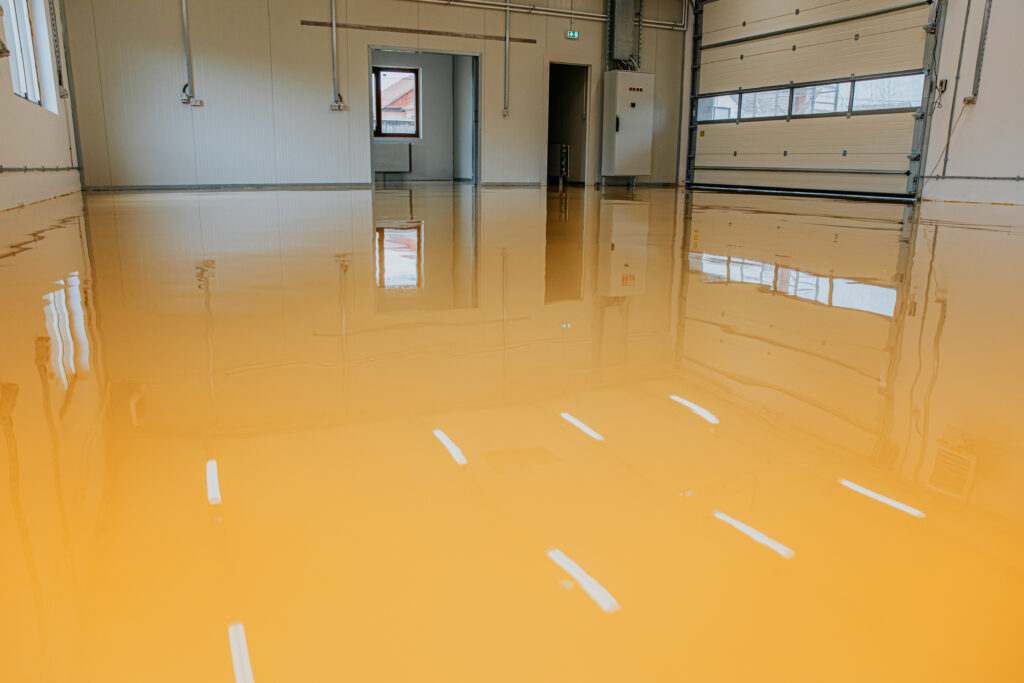
In Florida, industrial and commercial epoxy flooring means using resin-based coatings over concrete to create a seamless, hard-wearing surface that stands up to heavy traffic, chemicals, and frequent cleaning. These systems chemically bond to a properly prepared slab to deliver abrasion resistance, spill protection, and easy sanitation — benefits that matter in warehouses, manufacturing plants, retail spaces, and commercial kitchens. This guide explains why epoxy is a common choice for Florida businesses, focusing on performance features such as moisture control, UV-stable topcoats (and polyaspartic alternatives), and overall lifecycle cost. You’ll find an overview of the main epoxy system types used locally, how Florida’s heat and humidity affect product selection and scheduling, realistic cost ranges and the factors that drive price, step-by-step installation notes with moisture-mitigation guidance, plus maintenance and repair best practices. Practical checklists, comparison tables, and contractor-vetting tips are included to help facility managers and owners pick, budget for, and maintain the right flooring solution for their operation.
What Are the Key Benefits of Industrial and Commercial Epoxy Flooring in Florida?
Epoxy flooring delivers long-term durability, strong chemical resistance, and lower lifecycle maintenance by forming a tightly bonded, abrasion-resistant layer over concrete. That protective layer reduces wear from pallet jacks, forklifts, and heavy foot traffic, provides a seamless surface that limits dirt and liquid penetration, and makes daily cleaning faster and less costly. Together, these advantages lower total cost of ownership through longer service life and reduced downtime — a big gain for high-use facilities. Below are the primary benefits, short examples of where they apply, and a transition into how material choice and installation affect performance.
Epoxy flooring offers practical advantages Florida businesses rely on:
- Durability Under Traffic: Thick resin systems tolerate abrasion from forklifts and heavy loads, protecting the slab and delaying replacement cycles.
- Chemical and Stain Resistance: Epoxy tolerates many industrial chemicals and oils, shielding floors in manufacturing and maintenance areas.
- Low Maintenance: Smooth, non-porous coatings make daily cleaning quicker and reduce detergent use and labor time.
- Safety Enhancements: Slip-resistant aggregates and textured finishes improve traction in wet or oily conditions.
These benefits are maximized when the system type matches the use-case and the substrate receives proper surface preparation—points we cover next when discussing epoxy chemistry and installation factors that drive durability and resistance.
How Does Epoxy Flooring Enhance Durability and Chemical Resistance?
Epoxy builds durability and chemical resistance by curing into a cross-linked polymer network that bonds mechanically and chemically to a profiled concrete surface. Cross-linking raises surface hardness and abrasion resistance, while the specific resin formulation determines tolerance to solvents, acids, and alkalis commonly encountered in industrial settings. In warehouses and plants, thicker basecoats and aggregate broadcasts provide measurable wear resistance and longer service life than untreated concrete. Industry testing shows properly installed epoxy systems can cut surface abrasion and staining, reducing long-term repair and replacement costs. Knowing these mechanisms helps facility managers specify the right film thickness and resin chemistry for expected service conditions.
That material-science foundation leads directly to climate-specific performance questions — especially how Florida’s humidity and sun exposure influence product selection and timing.
Why Is Epoxy Flooring a Good Fit for Florida’s Humid, Warm Climate?
Epoxy performs well in Florida when installers follow moisture-mitigation protocols and choose UV-stable topcoats or polyaspartic options to limit yellowing and finish degradation. Proper primers and vapor-control membranes block moisture migration and reduce the risk of delamination caused by high moisture vapor emission rates. Choosing UV-stable topcoats or polyaspartic products also helps preserve appearance and gloss where interior spaces receive sunlight. Scheduling work to avoid peak humidity and honoring recommended cure windows further protects adhesion and long-term performance. These Florida-specific steps make moisture testing and deliberate material selection essential parts of any project specification.
Which Types of Epoxy Flooring Work Best for Florida Businesses?
Choosing the right epoxy system depends on the facility’s needs: showrooms, high-slip kitchens, heavy-duty warehouses, and clean rooms each prioritize different properties. Common system families include flake broadcast, metallic epoxy, quartz broadcast, and solid-color epoxy, with polyaspartic coatings used as fast-curing topcoats or as standalone systems for quick return-to-service. Each option balances durability, slip resistance, visual appeal, cure time, and cost. The table below compares common systems to help owners and managers decide quickly, followed by a short summary of trade-offs.
Different epoxy and related resinous floor types compared for Florida applications:
How Do Polyaspartic Coatings Improve Epoxy Flooring Performance?
Polyaspartic coatings add value by curing quickly, offering strong UV stability, and delivering robust chemical and abrasion resistance compared with some conventional epoxies. Their fast-reacting aliphatic chemistry achieves serviceable hardness in hours instead of days, which can drastically reduce operational downtime. Polyaspartic topcoats also resist yellowing from UV exposure, preserving appearance where natural light reaches interior spaces. For Florida businesses that need minimal disruption and long-lasting aesthetics, polyaspartic coatings are a practical topcoat over epoxy basecoats or a standalone system when substrate conditions allow.
How Much Does Epoxy Flooring Cost in Florida and What Drives Price?
Epoxy flooring costs in Florida vary widely by system type, surface preparation, and moisture-mitigation needs. From economical solid-color epoxies to higher-cost metallic or heavy quartz broadcast systems that require extensive prep, expect meaningful price variance. Major cost drivers include concrete repairs, moisture-control measures, resin choice, square footage, and jobsite logistics that affect labor. The cost-factor table below breaks these drivers into estimated impacts and sample values to help facility managers budget and understand which elements most influence final quotes.
Many local installers offer on-site evaluations and formal quotes; request an itemized proposal that separates surface prep, mitigation, materials, and labor so you can compare apples-to-apples.
What Is the Installation Process for Industrial and Commercial Epoxy Flooring in Florida?
Installation follows a predictable sequence: assessment and testing, surface preparation, repairs, primer and basecoat application, broadcast or decorative layer, topcoat, curing, and final inspection. Each stage has a clear purpose: assessment identifies moisture and structural issues; grinding or shot-blasting creates the required concrete profile; repairs restore flatness and structural integrity; primers and basecoats secure adhesion and act as barriers; aggregates add texture and wear resistance; topcoats deliver UV and chemical protection. This staged workflow helps ensure the finished floor meets performance goals and client expectations.
What Surface Preparation Steps Are Required for Florida Concrete Floors?
Surface preparation begins with moisture testing and creating the correct concrete profile via grinding or shot-blasting so you achieve a reliable mechanical bond. Follow with repairs for cracks, spalls, and joint transitions using polymer-modified repair mortars to restore flatness and strength. Clean thoroughly to remove oils, curing compounds, and other contaminants before applying primers. In Florida’s humid conditions, allow extra drying time or use moisture-tolerant primers when needed.
How Long Does Epoxy Flooring Installation Take in Commercial Settings?
Installation time varies with scope: small service areas can be completed in one to three days, while large warehouses or multi-zone facilities may need phased work over several weeks to accommodate drying and cure cycles. Fast-curing polyaspartic topcoats can shorten turnaround because they reach serviceable hardness in hours, enabling same-day return-to-service in some cases. Extended schedules result from major repairs, moisture mitigation work, and environmental constraints like high humidity or frequent rain. Project timelines should be set during assessment and include contingencies for Florida’s climate-driven delays.
How Can Businesses Maintain and Repair Epoxy Flooring in Florida?
Maintaining epoxy floors requires routine cleaning, periodic inspections, timely spot repairs, and occasional recoats to preserve performance and appearance. The non-porous surface simplifies daily upkeep, but Florida’s humidity and heavy traffic mean you should watch for moisture-related issues and wear. A structured maintenance plan reduces lifecycle costs by delaying full replacement and extending service intervals.
Daily to periodic maintenance routines for epoxy floors:
- Daily Sweeping and Wet Mopping: Remove grit and spills to prevent abrasive wear and staining.
- Weekly Deep Clean: Use pH-neutral cleaners and soft-scrub equipment to lift embedded soils.
- Monthly Inspections: Check for chips, delamination, or heavily worn areas and flag them for repair.
- Annual Recoat Review: Assess gloss and wear to decide if a maintenance recoat is needed.
What Are Best Practices for Cleaning and Maintaining Epoxy Floors?
Start with daily dry cleaning to remove abrasive particles, then perform scheduled wet cleaning with pH-neutral detergents that won’t attack the resin. Avoid harsh solvents, strongly alkaline or acidic cleaners, and abrasive pads that can scratch or dull the topcoat. For oil or chemical spills, act quickly: contain the spill and use approved solvent-compatible cleaners to prevent staining and softening. Periodic buffing or maintenance topcoats restore gloss and protection; document cleaning agents and schedules to help maintain warranty coverage and support lifecycle cost planning. These practices keep floors safe, attractive, and consistent across busy Florida sites.
When and How Should Epoxy Flooring Repairs Be Performed?
Repair at the first sign of functional damage — chips, delamination, persistent stains, or structural cracks — to prevent progressive failure. Minor repairs typically follow this workflow: clean the damaged area, abrade to create a mechanical key, apply a patch or polymer mortar, feather edges, and recoat with matching base and topcoat layers. Larger delaminations, extensive moisture-related failures, or widespread wear usually require professional assessment and may call for resurfacing. Track repair history and causes so you can determine when resurfacing or full replacement becomes more cost-effective than repeated spot fixes.
Timely, correct repairs preserve safety and extend system life while minimizing operational disruption in high-traffic facilities.
Where Can Florida Businesses Find Reliable Epoxy Flooring Contractors?
Finding dependable epoxy contractors requires focused vetting: look for relevant project experience, documented testing and moisture-mitigation procedures, clear warranties, and references from similar industries and climates. Prefer installers who demonstrate Florida-specific expertise, recommending vapor-control membranes when needed, and scheduling work around humidity — and who provide transparent, itemized proposals. Ask for sample panels, product data sheets, and references for comparable local projects to verify capability. The checklist and vetting questions below help facility managers compare vendors and choose a contractor who can deliver durable results in Florida conditions.
Key questions and checklist items to vet epoxy flooring contractors:
- Experience Verification: Request project examples and references in similar industries and climates.
- Testing & Mitigation Procedures: Confirm they perform moisture testing and recommend mitigation when necessary.
- Warranty & Insurance: Ask for written warranty terms and proof of liability insurance.
- Material Specifications: Request product data sheets and confirmation of UV-stable topcoats for sun-exposed areas.
Following these vetting steps helps ensure proposals are comparable and focused on the performance attributes that matter most in Florida.
What Should You Look for in a Professional Epoxy Flooring Installer?
A professional installer provides documented project experience, clear method statements for surface preparation and moisture mitigation, and written guarantees for workmanship and materials. Solid evidence includes before-and-after photos, client references in relevant sectors (warehousing, food processing, retail), and detailed proposals listing testing, repair, and coating specifications. Verify they use proper equipment (grinders, shot blasters), follow accepted concrete-profiling standards, and include contingency plans for moisture or substrate issues. Requesting these materials during selection reduces risk and ensures the installer understands Florida’s specific challenges.
These contractor qualifications lead naturally to how local Florida firms tackle climate-driven installation needs.