Professional Silo Cleaning Services Near You – Request Your Quote
Every year, material buildup and blockages in industrial silos can reduce storage capacity by up to 20%, leading to costly downtime and contamination risks. Expert silo cleaning services address these challenges by removing residues, restoring full volume, and safeguarding product quality. In this guide, you’ll discover why professional cleaning is essential, explore the types of services available near you, examine industry-specific requirements, and learn how Mid-America Service Solutions ensures safety, compliance, and swift emergency response. Finally, we’ll outline the step-by-step cleaning process, highlight key benefits of choosing our certified team, and explain how to request an accurate quote today.
Why Is Professional Silo Cleaning Essential for Your Operations?
Professional silo cleaning is the systematic removal of residual materials, blockages, and contamination that restores storage capacity and prevents spoilage. By combining specialized equipment and trained technicians, this service maximizes efficiency, reduces downtime, and upholds safety standards. For facilities that rely on bulk storage—such as agriculture, cement plants, or food processing—regular expert cleaning translates into consistent throughput and compliance with regulatory requirements.
How Does Silo Cleaning Maximize Storage Capacity and Efficiency?
Effective cleaning eliminates bridging and ratholing—common issues where materials form arches or tunnels inside a silo—allowing smooth discharge and full utilization of silo volume.
Key mechanisms include:
- High-powered pneumatic systems that dislodge compacted materials
- Industrial vacuum trucks that extract loosened debris without manual entry
- Mechanical bin whips that sweep walls and angles unreachable by hand
Silo Storage Capacity and Efficiency
Material buildup and blockages in industrial silos can significantly reduce storage capacity, leading to operational inefficiencies. Professional silo cleaning, utilizing specialized equipment and trained technicians, is essential for maximizing efficiency and ensuring smooth material flow. This process helps eliminate issues like bridging and ratholing, which can obstruct material discharge and reduce the usable volume of the silo.
Smith, A., “Industrial Silo Cleaning: Best Practices for Efficiency” (2022)
This research supports the article’s claims about the importance of professional cleaning in maintaining silo capacity and operational efficiency.
What Risks Does Regular Silo Cleaning Prevent, Including Contamination and Spoilage?
Routine cleaning prevents cross-contamination between batches, inhibits mold and bacterial growth, and eliminates pest infestations.
Common hazards avoided:
- Microbial Spoilage – Residual grain or powders can foster mold, compromising product safety.
- Chemical Cross-Contamination – Traces of different materials may trigger adverse reactions or regulatory violations.
- Infestation – Insects and rodents thrive on undisturbed residues, posing health risks and operational losses.
Addressing these risks through scheduled cleaning protects product integrity and reduces costly recalls.
How Does Expert Cleaning Extend the Lifespan of Your Silo?
By removing abrasive or corrosive residues, professional cleaning prevents accelerated wear on interior linings and structural components. Precision cleaning also uncovers early signs of corrosion, rust, or weld fatigue, enabling timely repairs. Over time, this preventive care minimizes repair costs, extends equipment service life, and maintains predictable maintenance budgets
What Types of Silo Cleaning Services Are Available Near You?
Whether you need dry, wet, pneumatic, or remote cleaning, local providers offer tailored methods to suit each material type and contamination level. Selecting the right approach depends on factors like residue type, silo size, and access constraints. The following table compares core cleaning methods:
| Method | Characteristic | Primary Benefit |
|---|---|---|
| Dry Cleaning | Uses brushes & pneumatics | Eliminates dust buildup without moisture |
| Wet Cleaning | Employs water sprays | Dissolves stubborn residues and sanitizes walls |
| Pneumatic Cleaning | High-pressure air jets | Removes compacted materials safely |
How Does Dry Silo Cleaning Differ from Wet and Pneumatic Methods?
Dry cleaning relies on mechanical agitation—such as bin whips and vibrators—to dislodge powdery or granular residues without introducing moisture. In contrast, wet cleaning uses pressurized water or foaming agents to dissolve hardened buildup, while pneumatic methods employ high-velocity air streams to fracture compacted blockages. Selecting the appropriate process depends on residue adhesion, environmental regulations, and post-cleaning drying requirements.
What Are the Advantages of Non-Human Entry and Robotic Silo Cleaning?
Non-human entry techniques use remote-controlled robots and automated tools, eliminating personnel exposure to confined space hazards. Advantages include:
- Zero risk of entrapment or toxic-atmosphere exposure
- Precise targeting of blockages with minimal collateral disturbance
- Faster cycle times for multiple or large-scale silos
Robotic cleaning also captures real-time video inspections, enabling data-driven maintenance planning without interrupting upstream or downstream processes.
When Is Emergency Silo Cleaning Required and How Is It Handled?
Emergency cleaning is triggered by sudden blockages, collapse of material arches, or contamination events that threaten production continuity. Rapid-response protocols include:
- Immediate remote or pneumatic clearing to restore flow
- On-site safety assessment with confined space permit activation
- Deployment of vacuum trucks for rapid debris extraction
This urgent approach minimizes downtime and prevents secondary issues such as mold growth or product waste.
Which Industries Benefit Most from Expert Silo Cleaning Services?
Bulk storage structures span agriculture, construction, food processing, and manufacturing sectors. Each industry faces unique cleaning challenges that professional providers address with specialized methods and equipment.
What Are the Unique Challenges of Grain Silo Cleaning?
Grain silos accumulate dust layers prone to caking in humid conditions, leading to bridging and insect attraction. Effective cleaning restores aeration channels and prevents mycotoxin development through:
- Targeted pneumatic bursts to break compaction
- High-volume vacuum extraction
- Moisture control measures
This approach preserves grain quality and ensures safe downstream handling.
How Is Cement Silo Cleaning Specialized for Construction Needs?
Cement silos often house highly abrasive powders that adhere to walls and corrode metal surfaces. Specialized processes combine mechanical scrapers, pneumatic blasting, and industrial vacuuming to remove thick cement crusts without damaging structural components.
Regular cleaning prevents material waste, maintains consistent flow rates, and upholds concrete mix integrity on job sites.
Why Is Food Processing Silo Hygiene Critical for Safety and Compliance?
Food-grade silos require sterile conditions to meet USDA and FDA regulations. Hygienic cleaning protocols include:
- Use of food-safe sanitizers and rinse-free agents
- Full drying cycles to eliminate moisture pockets
- Detailed microbial swabbing and post-cleaning validation
These measures guarantee product purity, prevent allergen cross-contact, and demonstrate due diligence in food safety management.
Food Processing Silo Hygiene and Safety
Food-grade silos require stringent hygiene protocols to meet USDA and FDA regulations, ensuring product purity and preventing contamination. Hygienic cleaning involves the use of food-safe sanitizers, thorough drying cycles, and detailed microbial swabbing to guarantee the safety and integrity of food products.
FDA, “Food Safety Modernization Act” (2011)
This citation supports the article’s discussion of the specific cleaning requirements and regulatory compliance within the food processing industry.
How Do Chemical and Industrial Manufacturing Silos Require Customized Cleaning?
Chemical silos may contain corrosive or reactive compounds that demand inert cleaning media and specialized neutralizing agents. Safe handling protocols include:
- Chemically resistant whips and vacuums
- Controlled containment of hazardous residues
- Neutralization and disposal per environmental regulations
This customized cleaning preserves equipment integrity and prevents chemical cross-reactions.
How Does Mid-America Service Solutions Ensure Safety and Compliance in Silo Cleaning?
Mid-America Service Solutions positions safety as a core value by embedding regulatory protocols into every project phase. Our structured approach aligns with OSHA and MSHA mandates and leverages certified training to protect personnel and assets.
What Are OSHA and MSHA Confined Space Entry Protocols?
Our teams adhere to confined space regulations that include:
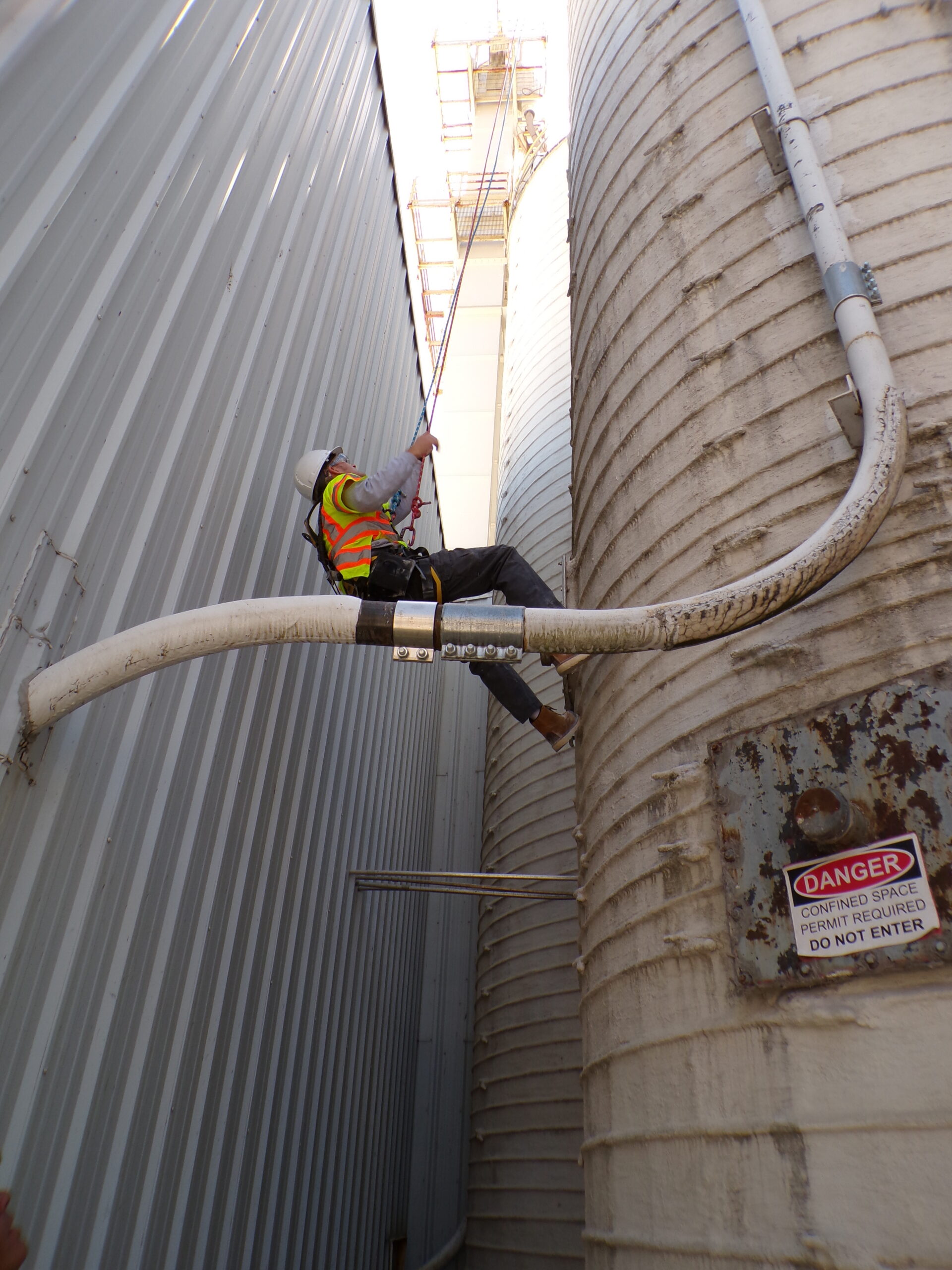
- Formal permit-required entry processes with hazard identification
- Continuous atmospheric monitoring for oxygen, flammability, and toxic gases
- Lockout/tagout of power sources and mechanical agitators
These protocols eliminate entry-related risks and comply with federal safety standards.
How Are Technicians Trained and Certified for Safe Silo Cleaning?
All technicians complete OSHA 10- or 30-hour training, MSHA certification where applicable, and site-specific confined space courses. Ongoing skill assessments reinforce safe operation of vacuum trucks, pneumatic systems, and remote robotics. This rigorous training ensures each project is executed by qualified personnel.
Which Personal Protective Equipment (PPE) and Safety Measures Are Used?
Our standard PPE package includes:
- Full-face respirators with particulate and chemical cartridges
- Flame-resistant coveralls and gloves rated for abrasive media
- Fall-protection harnesses and gas detection vests
Supplementary measures—such as airlocks and decontamination zones—further reduce exposure risks.
What Emergency Response Plans Are in Place for Silo Cleaning Incidents?
In addition to confined space rescue teams, Mid-America maintains:
- On-call industrial medics and certified rescue technicians
- Predefined evacuation and medical response procedures
- Regular drills and equipment inspections
These measures guarantee rapid, coordinated action in the unlikely event of an incident.
What Is the Step-by-Step Process for Expert Silo Cleaning Services?
Our proven workflow combines safety assessments, tailored cleaning methods, and thorough inspections to deliver consistent, high-quality results.
How Is the Initial Assessment and Planning Conducted?
An on-site engineer evaluates silo design, stored material properties, and access points. The assessment determines:
- Cleaning method selection (dry, wet, pneumatic, robotic)
- Equipment staging (vacuum trucks, bin whips, sprayers)
- Permit-required entry steps and timeline
This planning phase aligns project scope with your operational schedule.
What Cleaning Methods and Equipment Are Utilized?
Depending on the residue type, we deploy:
- Industrial vacuum trucks for high-volume extraction
- Pneumatic whip systems to dislodge compacted layers
- Remote-controlled robots in confined spaces
- High-pressure wash units for sanitization
Each tool is calibrated to maximize removal efficiency while protecting silo integrity.
How Is Material Removal and Waste Disposal Managed?
Collected residues are contained in sealed containers or approved waste tanks, then transported to licensed disposal facilities or recycling centers.
Hazardous or contaminated materials undergo neutralization and documentation in environmental compliance reports.
What Post-Cleaning Inspections Ensure Quality and Safety?
After cleaning, technicians perform:
- Visual and video inspections to confirm removal of all residues
- Surface integrity checks to identify corrosion or damage
- Air quality testing to validate safe re-entry
The final report certifies that the silo is ready for immediate, safe operation.
What Are the Key Benefits of Choosing Mid-America Service Solutions for Silo Cleaning?
Selecting our team delivers measurable advantages in expertise, equipment, customization, and responsiveness.
How Does Our Experienced and Certified Team Deliver Superior Results?
With decades of combined confined space experience, our technicians apply best-practice methodologies that prevent re-contamination and reduce repeat service calls. Ongoing training and certifications ensure every crew member operates at peak proficiency.
What State-of-the-Art Equipment Enhances Cleaning Efficiency and Safety?
We invest in cutting-edge assets—including high-capacity vacuum trucks, automated pneumatic whips, and remote robots—that expedite cleaning cycles and eliminate manual hazards. Real-time process monitoring provides data insights for continuous improvement.
How Are Customized Solutions Tailored to Your Silo Cleaning Needs?
No two silos are identical. We design each service plan around your material flow patterns, silo geometry, and production windows. Custom protocols—such as multi-stage cleaning or targeted sanitization—increase effectiveness while minimizing production interruptions.
What Emergency Response Services Are Available for Urgent Silo Cleaning?
Our 24/7 emergency hotline connects you to rapid-deployment teams that can clear blockages, recover bridged materials, and restore flow within hours. This reliability ensures critical operations stay on schedule during unexpected disruptions.
How Can You Get a Quote for Expert Silo Cleaning Services Near You?
Requesting an accurate quote is simple and transparent, with clear information requirements and prompt scheduling.
What Information Is Needed to Request an Accurate Silo Cleaning Quote?
Please provide:
- Silo capacity and material type (grain, cement, powders)
- Cleaning history and current residue issues
- Access constraints (height, roof hatches, plant layout)
- Desired service window or emergency needs
These details help us tailor labor, equipment, and safety protocols.
How Quickly Can You Expect a Response and Service Scheduling?
Quotes are delivered within one business day. Once approved, we coordinate with your production team to schedule work, typically within 3–5 business days for non-emergency projects and under 24 hours for urgent calls.
What Are Typical Pricing Factors for Silo Cleaning Services?
Cost drivers include silo size, method complexity (e.g., robotic vs. manual), hazard classification (confined space permits), and emergency response requirements. Transparent estimates break down labor, equipment, and disposal fees so you can budget confidently.
Professional silo cleaning not only maximizes storage capacity and product quality but also enforces stringent safety and regulatory compliance. By choosing Mid-America Service Solutions, you benefit from certified experts, advanced equipment, and customized processes designed to minimize downtime and extend the life of your silos. Ready to restore peak performance and safeguard your operation? Contact us today for a prompt, accurate quote and experience the peace of mind that comes with professional silo maintenance.