
Comprehensive Storage Tank Inspection Services
Storage tank inspection services evaluate the condition, safety, and regulatory compliance of aboveground and underground tanks through a combination of visual assessment, non-destructive testing, and engineered audits. Owners and operators of chemical and gas tanks rely on inspection data to prioritize repairs, schedule maintenance, and reduce environmental and operational risk. This article explains key inspection types, the non-destructive testing (NDT) methods commonly used, applicable regulatory requirements, recommended inspection frequency planning using time-based and risk-based approaches, and the benefits of proactive integrity management. Read on to understand how modern inspection techniques, robotics and drones, and structured RBI programs can keep tanks safe, compliant, and operational.
What Are the Key Types of Storage Tank Inspections?
Storage tank inspections encompass internal and external examinations, targeted bottom and roof checks, settlement and foundation assessments, and leak detection programs; each type focuses on specific failure modes and evidence of deterioration. Internal inspections reveal corrosion, pitting, and weld defects on shell and floor surfaces while external inspections detect coating breakdown, shell deformation, and foundation issues; both contribute to remaining-life estimates. Specialized inspections—such as settlement surveys and hydrostatic bottom checks—address mechanical deformation and floor corrosion that are common in chemical and gas service. The following list summarizes the most common inspection types and explains why each is necessary for safe storage, then explains how AST and UST priorities differ.
The main inspection categories are:
- Internal Inspection: Visual and NDT checks of shell, floor, roof, and welds to detect corrosion and structural defects.
- External Inspection: Assessment of coatings, shell deformation, nozzle integrity, and secondary containment for environmental protection.
- Bottom/Floor Inspection: Focused evaluation of the tank floor for localized corrosion and thinning that can lead to leaks.
These inspection categories form the backbone of a comprehensive program and set the stage for considering AST versus UST-specific approaches in the next subsection.
How Do Aboveground and Underground Storage Tank Inspections Differ?
Aboveground storage tank (AST) inspections prioritize visual access to shell, roof, and appurtenances and leverage internal entry when required, because accessibility supports direct internal NDT like ultrasonic thickness mapping. Underground storage tank (UST) inspections emphasize leak detection, soil monitoring, and methods that infer integrity without full internal access, so technologies such as precision leak detection and substrate corrosion monitoring play larger roles. AST failure modes often include atmospheric corrosion and settlement effects visible on external components, while USTs are prone to external corrosion influenced by soil chemistry and cathodic protection performance. Understanding these differences guides the selection of NDT methods, inspection intervals, and regulatory evidence collection for subsequent compliance reporting, which leads into the distinct demands of chemical and gas tank inspections.
What Are the Specific Requirements for Chemical and Gas Tank Inspections?
Chemical and gas tanks require tailored inspection protocols because contents create unique hazards—flammability, toxicity, or reactive chemistries—that affect entry procedures, NDT selection, and recordkeeping. Safety controls often include atmosphere monitoring, inerting, and strict lockout/tagout procedures before internal work; NDT choices favor contactless or remote-capable methods where explosive atmospheres exist. Documented inspection records must capture material compatibility, secondary containment status, and test results to satisfy regulators and to support risk-based decision making.
Which Non-Destructive Testing Methods Are Used in Tank Inspections?
Non-destructive testing (NDT) methods provide the quantitative and qualitative evidence needed to detect corrosion, cracks, weld defects, and wall loss without impairing the tank, and common techniques include magnetic flux leakage, radiography, eddy current, acoustic emission, and magnetic particle testing. Each method targets specific defect types and has strengths and limitations tied to tank material, geometry, and accessibility; selecting the right NDT mix is critical for accurate integrity assessment. Emerging tools—robotic crawlers and drones—extend inspection reach, improve safety, and enable higher-resolution data capture for repeatable condition monitoring.
What Are the Advantages of Robotic and Drone Inspections for Tanks?
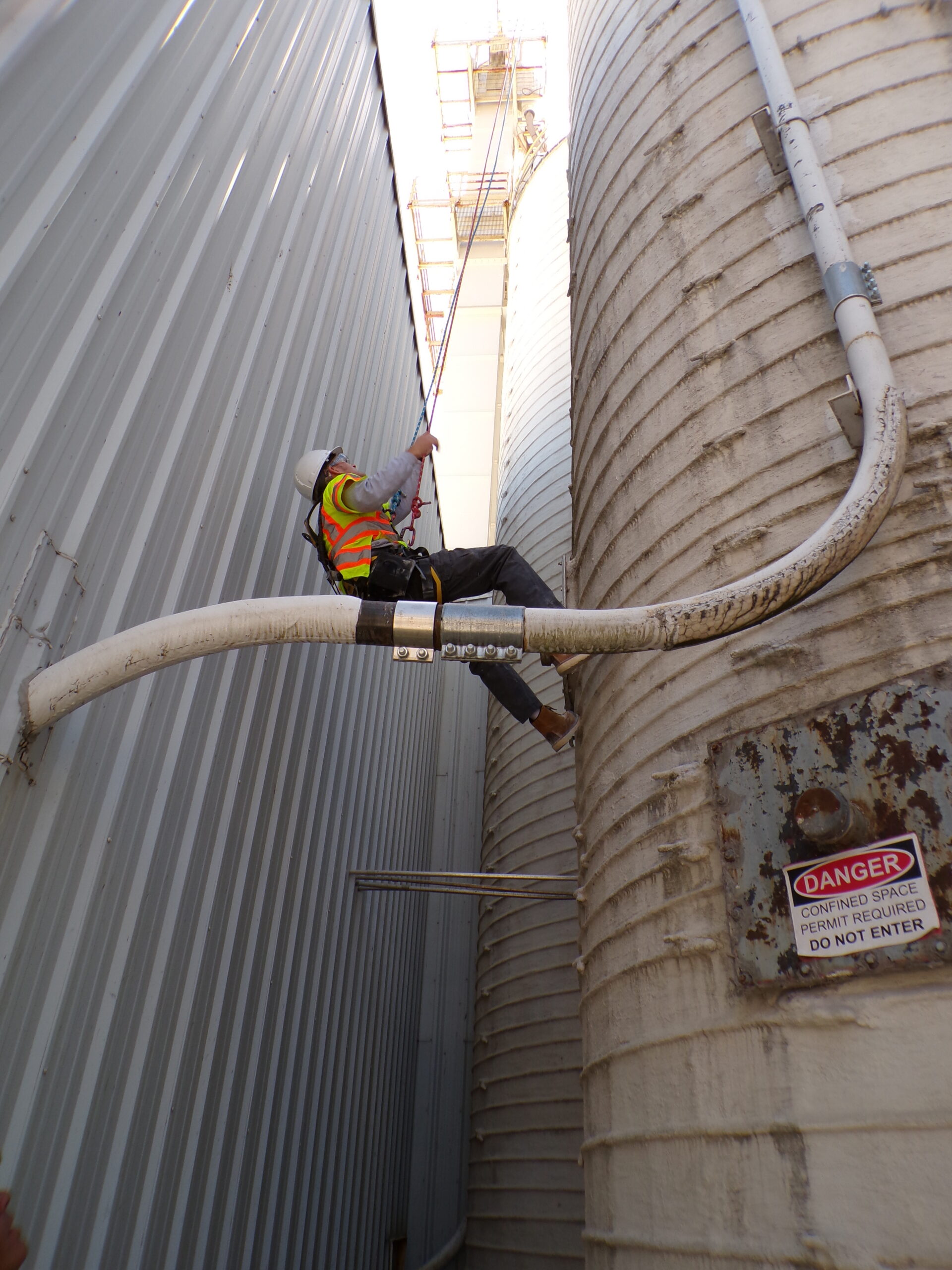
Robotic crawlers and inspection drones increase safety by reducing confined-space entry and by reaching roofs, large shell areas, or undersides with minimal human exposure, and they collect consistent high-resolution imagery, UT scans, and other sensor outputs for analysis. Repeatability in data capture enables trend analysis and integration with AI/ML tools for predictive maintenance, while photogrammetry and 3D mapping improve defect localization and repair planning. Limitations include battery life, payload restrictions, and constrained navigation in highly cluttered interiors; nonetheless, robotics and drones substantially improve inspection coverage and data quality. These technology benefits underscore how professional inspection programs combine traditional NDT with robotics to optimize outcomes and will lead into the regulatory context that drives documentation and standards compliance.
How Should Tank Inspection Frequency and Risk-Based Planning Be Determined?
Inspection frequency should be determined through a structured decision process that balances time-based schedules against risk-based inspection (RBI) analysis, accounting for tank age, material, contents, environment, and historical performance to allocate inspection resources where they reduce the greatest risk. Time-Based Inspection (TBI) provides a simple schedule based on prescriptive intervals, while RBI prioritizes inspection effort using probability and consequence metrics to extend intervals for low-risk items and shorten them where risk is elevated. A pragmatic three-step approach helps operators transition to RBI: gather high-quality condition and operational data, score risk attributes, and apply interval adjustments with monitoring triggers. The EAV decision table below maps tank factors to recommended inspection responses to support RBIdriven planning.
| Tank factor | Impact on frequency | Recommended action / inspection interval guidance |
|---|---|---|
| Age (years) | Older tanks have higher corrosion probability | Increase bottom and UT frequency; consider annual detailed inspections for tanks >20 years |
| Material (carbon steel vs. alloy) | Carbon steel corrodes faster in many environments | Use more frequent UT and MFL for carbon steel; alloys may allow extended intervals |
| Contents (corrosive, flammable) | Aggressive contents increase consequence and probability | Shorten intervals, use RBI scoring and enhanced leak detection |
| Environment (coastal, buried) | Aggressive environments accelerate degradation | Increase monitoring, consider cathodic protection for USTs, more frequent external checks |
Three-step RBI approach:
Data collection: Compile age, material, operating conditions, incident history, and previous inspection data.
Risk scoring: Evaluate probability and consequence for failure modes to prioritize assets.
- Interval setting and monitoring: Assign inspection frequencies and triggers for earlier re-inspection when indicators change.
These actionable steps guide implementation and segue into how professional RBI services can help operators execute the plan.
Professional implementation advisory: For organizations moving from prescriptive schedules to risk-based programs, consulting qualified inspection providers or RBI auditors offers a practical pathway to develop defensible inspection intervals, establish monitoring triggers, and implement audit packages that include condition assessment, data management, and re-inspection planning. Such providers typically combine field NDT, corrosion rate analysis, and engineering judgement to set intervals that optimize safety and operational availability while documenting rationale for regulators. Engaging specialists accelerates RBI adoption and reduces the administrative burden on in-house teams; next we explore the benefits that accrue from proactive integrity management supported by inspections.
What Is the Difference Between Time-Based and Risk-Based Inspections?
Time-Based Inspection (TBI) prescribes fixed intervals irrespective of measured condition and is simple to administer, whereas Risk-Based Inspection (RBI) tailors intervals to the probability and consequence of failure, providing a more efficient allocation of inspection resources. TBI remains appropriate for low-risk assets or where regulatory rules mandate fixed cycles, but RBI can reduce unnecessary shutdowns and focus resources on high-consequence tanks. A practical transition involves piloting RBI on a subset of tanks with high variability or cost of failure to validate models before broader rollout. Understanding transition mechanics and governance requirements supports a successful shift to RBI and prepares operators for tailored inspection schedules described next.
How Do Tank Age, Material, and Contents Influence Inspection Schedules?
Tank age often correlates with increased corrosion and fatigue risk, necessitating more frequent UT and bottom inspections as tanks exceed certain service life thresholds; older tanks also require more detailed records for remaining-life estimates. Material selection affects susceptibility to specific corrosion mechanisms—carbon steel is vulnerable to uniform and pitting corrosion, while certain alloys resist specific chemistries but may suffer other degradation modes—driving different monitoring strategies. Contents determine consequence and inspection method: hazardous gases and corrosive chemicals increase both the required safety protocols and the need for sensitive leak detection and corrosion monitoring. These interactions define customized inspection plans that balance frequency, method selection, and safety procedures.
Comprehensive Aboveground & Underground Storage Tank Inspections
Proactive tank integrity management—integrating regular inspections, data-driven RBI, and timely repairs—reduces environmental incidents, prevents costly unplanned downtime, and extends asset service life by addressing defects before they escalate into failures. Documented inspection programs also strengthen regulatory defense, support insurance and asset valuation, and improve predictability of maintenance budgets by converting reactive repairs into planned interventions. A conceptual ROI calculation shows that preventing a single moderate spill or unplanned outage often justifies inspection and monitoring investments over multiple years due to avoided cleanup costs, fines, and lost production. The following benefits list summarizes the principal value drivers and sets up how inspections prevent contamination and downtime.
- Reduced Environmental Risk: Early detection prevents leaks and spill propagation, protecting soil and groundwater.
- Minimized Unplanned Downtime: Timely repairs convert emergency outages into scheduled maintenance windows.
- Extended Asset Life: Condition-based repairs and corrosion control prolong usable tank service life.
How Do Regular Inspections Prevent Environmental Contamination and Operational Downtime?
Regular inspections create a detection-to-action pathway: routine measurements identify thinning or breaches early, enabling scheduled repairs or containment actions before leakage occurs, thus averting environmental contamination and costly emergency responses. For example, early identification of localized bottom corrosion through UT and MFL can prompt targeted plate replacement instead of full-tank replacement following a leak, saving time and expense. Inspection records also speed incident response and root-cause analysis when anomalies occur, reducing downtime by shortening investigative windows. This preventative dynamic demonstrates why inspection cadence and method selection matter and transitions into how professional inspection services maximize these outcomes.
How Can Professional Tank Inspections Extend Tank Lifespan and Ensure Compliance?
Professional inspection programs extend tank lifespan by applying certified inspection techniques, data analytics, and engineered repair criteria that target high-risk degradation mechanisms before they compromise containment, and they ensure compliance by producing documented, auditable records that satisfy regulatory requirements. Typical professional practices include scheduled UT mapping, integration of robotic/droned data capture, RBI scoring, and structured reporting formats that link condition to required actions and re-inspection intervals. By combining experienced inspectors, NDT specialists, and engineering assessment, professional audits deliver ROI through fewer failures, optimized maintenance spend, and lower regulatory exposure.
When to consult professional inspectors:
- When transitioning to RBI and needing defensible interval justification.When robotics/drones can improve safety or coverage for complex tanks.When preparing for formal repair approvals or SPCC audits.
These advisory points underline the practical value of professional services in preserving safety and compliance and introduce the article’s closing guidance.
The article recommends immediate next steps: compile a condition baseline (cleaning and UT mapping), perform a risk-scoring workshop to prioritize tanks, and consult qualified inspection providers for RBI program development and compliance planning. Engaging professional inspectors to design and execute audits, integrate robotic/droned data capture, and produce documented repair plans will translate inspection findings into measurable safety and operational benefits. These actions position operators to reduce spill risk, avoid fines, and extend tank service life through data-driven integrity management.